 James' CS Book
Scrum Methodology — Scrum Guide
What Is the Scrum Methodology?
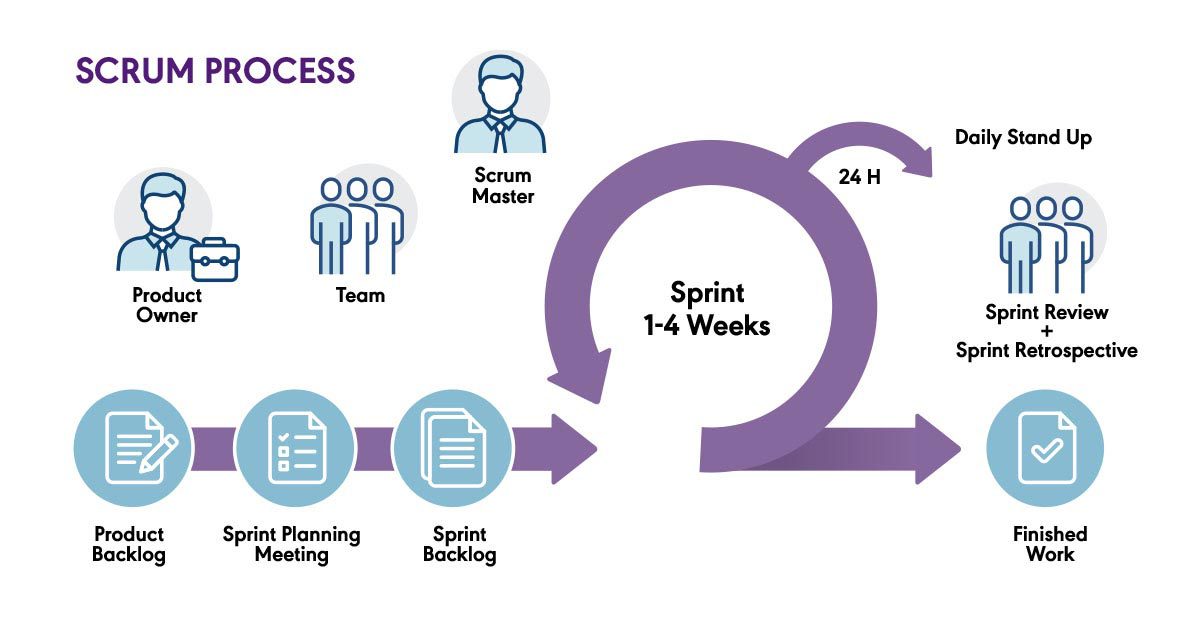
In the world of Agile project management, there are a number of approaches to choose from. Teams may apply a specific Agile framework based on the project type, length, scope, or requirements. For teams who need to deliver quickly and continuously, the Scrum methodology can be a solid way to apply Agile principles while delivering value to the customer or end-user. But what is Scrum, and what are the different processes, principles, and values needed to uphold this framework?
If you’re new to Agile product development, read on because this guide will cover the Scrum methodology, Scrum principles, the main Scrum roles, and some of the benefits of choosing Scrum. We’ll begin with the definition of Scrum.
What is Scrum?
Scrum is a project management framework that provides a structure for fast-paced Agile teams to prioritize, manage, and execute work. This structure helps teams deliver value to customers, collaborate often and effectively, and solve pressing development issues. Scrum also facilitates an improved product delivery process.
Scrum ceremonies, artifacts, and roles ensure a structured approach to Agile project management. Each meeting, role, and Scrum artifact acts as a piece of the puzzle, enabling teams to set priorities, continuously deliver, and problem-solve efficiently.
Because of this, Agile Scrum product development is popular. According to a report from the project management institute, 55% of project managers confirmed that they use Scrum at least some of the time.
Scrum principles

Scrum’s principles serve as guidelines for executing the Scrum methodology. They ensure that there is an understanding of the processes and dynamics of a Scrum environment. It is the Scrum master’s responsibility to uphold Scrum principles and values. Here’s a breakdown of the six Scrum principles.
- Empirical process control
To remain effective, agile, and able to respond to change, Scrum relies on empirical process control. This means that the entire Scrum process is ruled by transparency, inspection, and adaptation.
- Self-organization
The Scrum method encourages a level of independence from the Scrum team. When Scrum teams are described as “self-organizing,” this simply means that they manage their own tasks, solve problems independently, and are accountable to themselves and each other — rather than an outside manager.
- Time-boxing
Time-boxing is a practice where a fixed amount of time is allocated for certain activities or objectives. Time-boxing allows for activities to be completed in an optimal time frame without running too long. Time-boxing is ideal for setting time frames around activities like sprint planning and sprint retrospectives.
- Value-based prioritization
To achieve value-based prioritization, items in the product backlog are constantly updated based on their value and importance to the end-user and stakeholders.
- Iterative development
Because of its ongoing sprints, the objectives in product development are consistently reviewed and updated to create the best quality product and delivery process.
- Collaboration
Scrum teams collaborate frequently and, sometimes, at great length. Daily standup meetings are an opportunity to collaborate and problem-solve, as are sprint reviews and retrospectives.
Roles on an Agile Scrum team

As mentioned earlier, the Scrum team’s goal is to build a quality product for the end-user. But who does the Scrum team consist of? The Scrum team consists of three roles. The product owner, Scrum master, and development team. Here’s a breakdown of each Scrum role and what they do.
The Product Owner
The product owner is in charge of maximizing value. That means they’re not just concerned about the day-to-day work on the product or planning the sprint itself. Their job is to ensure that the interests of the stakeholders and customers are represented through the prioritization of the product backlog. The product owner also ensures that the deliverables meet evolving requirements.
The Scrum Master
The Scrum master is the person in charge of guiding the development team to be more self-sufficient. The Scrum master acts as a facilitator, ensuring all team members adhere to the principles and processes of the Agile Scrum methodology.
As a guide, the Scrum master encourages the team to think of creative ways to tackle pressing impediments. This is achieved by constantly asking the right questions that will nudge them to come up with solutions.
The Development Team
The development team is the brains behind the process. While they work with the support of the product owner and Scrum master, they have the necessary technical skills to build and deliver a great product.
Ideally, the development team consists of cross-functional team members, including QA testers, designers, and developers. To ensure optimal performance, the development team must observe Scrum best practices and rules during product development.
The Product Backlog

The product backlog includes the necessary features and functionalities that need to be added to the software. Because the product owner sets the foundation of the product development, they create and groom the backlog by adding and prioritizing items. The product owner evaluates these items by asking questions such as “what impact does this feature create in the development process?'', What are the risks involved?”, “What are the costs involved?” Answering these questions helps outline the clear value of each item in the backlog.
Sprint planning
After creating the product backlog, the team begins sprint planning. This process is where teams go through the product backlog to figure out how to achieve the most important objectives and ensure they don’t spread themselves too thinly. After this, the team can get a better understanding of how the product development will progress.
Sprints

During sprints, the Scrum team completes the goals and objectives outlined for that particular time frame. Ideally, a sprint should last 1 – 4 weeks — but shouldn’t take more than a month. During the sprint, the Scrum team attends a daily standup meeting with the product owner and Scrum master. This is where they discuss what they are working on that day and talk through any issues or impediments they are experiencing. It's important to note that no changes must occur when a sprint is in progress. This is to ensure that the team can meet the sprint goal without issue.
Sprint Review/Retrospective

At the end of every sprint, the Scrum team — including the product owner and Scrum master — gather together to review the sprint, including what went well, what was completed, and what the updated backlog will look like. A product demo may also be on the agenda.
Here, the product owner will validate the sprint work. Once this phase ends, the cycle begins again, starting with the product backlog, sprint planning, next sprint, and a product increment.
In summary, the Scrum methodology is a learning and disciplinary process that enables the Scrum team to identify ways to improve and deliver the best quality product to the end-user.
Benefits of the Scrum methodology

Scrum provides tremendous benefits to organizations, product development teams, and individuals. Here are some of the benefits of Scrum:
- Timely prediction
By using the Scrum framework, you can estimate the average speed of the team. As a result, it is possible to estimate when a certain feature in the product backlog will be delivered.
- Improved team morale
The Scrum method involves a concerted effort on the part of each team member. Being part of a self-organizing team enables people to be proactive, innovative, and focused. The support of a Scrum master is also vital for team morale because they guide the Scrum team, remove all impediments, and work towards improving the performance of the team.
- Better quality product
Scrum provides the framework for collaboration and continuous improvement. Activities like sprint retrospectives and sprint reviews ensure the team has a chance to reflect and improve their processes.
- Increased customer satisfaction
The primary objective of the Scrum team is to provide value for the end-user. This is achieved by:
- Keeping all stakeholders and customers in the loop throughout the project development
- Having an experienced product owner that understands the scope of the project development cycle
- Constantly updating and re-prioritizing the project backlog as feedback is provided
In Agile software development, the Scrum framework encourages better collaboration and understanding amongst team members.
When a team follows Scrum’s principles and guidelines, they create the opportunity to learn, adapt and be more independent at every stage of product development.
Stages of a Scrum sprint project management

Sprint project management involves a number of stages — from planning, execution, and the sprint review to the all-important sprint retrospective. In this section, we’ll cover sprint ceremonies and the key stages of a typical Scrum sprint.
- Planning stage
In this stage, the Scrum team holds a sprint planning meeting. Here the product owner and the development team meet to decide what backlog items are being prioritized for the next sprint. The development team will share details around bandwidth and capacity. In the planning stage, a sprint goal is defined.
- Implementation
This is the stage that involves the bulk of the effort of the development team. During this process, the team works to produce a product increment. While the product owner doesn’t typically participate in this stage, they should be available to answer any questions the Scrum team may have during the sprint process.
The team holds a daily Scrum meeting to keep up with progress and ensure every team member is on the same page with regards to accomplishing the sprint goal.
- Sprint review and testing
At the end of every sprint, the Scrum team, product owner, Scrum master, and stakeholders gather together to hold a sprint review meeting to test whether the product increment holds up.
In this stage, the product owner confirms if the functionalities fit the sprint’s requirements and whether the team has accomplished the sprint goal.
Sprint retrospective
In this stage, the Scrum team, Scrum master, and product owner hold a sprint retrospective where they discuss the sprint process, identify what was a success, and outline what could be improved upon.
What to do before a Scrum sprint?
The Scrum sprint process can be challenging if it is not managed well. So what are the necessary steps needed to make the sprint process a success? Here are three important steps for getting started:
- Create, maintain, and prioritize the backlog on an ongoing basis
The product owner is responsible for maintaining the product backlog. The goal is to ensure that essential product functionalities are given the highest priority. This also ensures that there is no confusion about which features will be implemented during each sprint cycle.
- Consider the Scrum team’s capacity during the sprint planning phase
The Scrum team shouldn’t take on more than they can handle during each sprint. So, before defining the sprint goal and finalizing the sprint backlog, the Scrum team should be transparent about their capacity and take care not to overcommit.
- Apply Agile Scrum principles and values
Agile Scrum principles and values serve as important guidelines that ensure that the sprint produces the best possible product. Ideally, a Scrum master helps facilitate the proper execution of Agile Scrum principles and values. This empowers the team to self-organize successfully and navigate through challenges and changes. When the team applies the right principles, they face fewer obstacles and work at their best capacity.
Daily Scrum Meetings
Daily Scrum meetings are essential to the success of any Scrum sprint. They are part of a typical Scrum workflow and used to track progress, discuss matters arising, and work through impediments. In this Scrum guide section, we’ll offer tips and best practices for productive and successful daily Scrum meetings. Let’s begin with a comprehensive daily Scrum meeting definition.
What is a daily Scrum meeting?

A daily Scrum meeting (also known as a stand-up meeting) is a short, time-boxed meeting where members of the Scrum team gather to provide updates on what they worked on the previous day, what they plan to do today, and what (if any) impediments or issues they have encountered.
Stand-up meetings are one of the Scrum ceremonies and are a process built into Agile Scrum that encourages problem-solving, self-organization, and continuous improvement.
Daily Scrum meetings are short and typically last 15 minutes. To reduce complexity, the daily stand-up meeting is ideally held at the same time and same place every day. Some teams even hold the meeting standing up to emphasize its time sensitivity.
Ultimately, daily Scrum meetings enable teams to work through issues and constantly plan, reflect on, and synchronize activities that are in service of the sprint goal.
Benefits of daily Scrum meetings
For Agile teams focused on cultivating supportive working environments, achieving the sprint goal, and ensuring efficient collaboration, daily Scrum meetings are very beneficial. When appropriately planned, daily Scrum meetings have the following benefits:
Daily Scrum meetings help sync team progress
Team members can share the progress they’ve made toward the sprint goal, what they’re working on for the day, and get feedback on whether they are moving at a proper pace or not. They can also gain a clear understanding of what other team members are working on, ensuring clarity and visibility throughout the sprint.
Daily Scrum meetings promote teamwork
During the session, everyone shares their progress and addresses whatever issue may have arisen. Scrum team members can help each other overcome challenges and employ Agile values and principles.
Daily Scrum meetings can be a problem-solving platform
Run into an Agile impediment? Scrum teams can communicate their concerns or issues so that other members can share possible solutions.
Daily Scrum meeting three questions and agenda
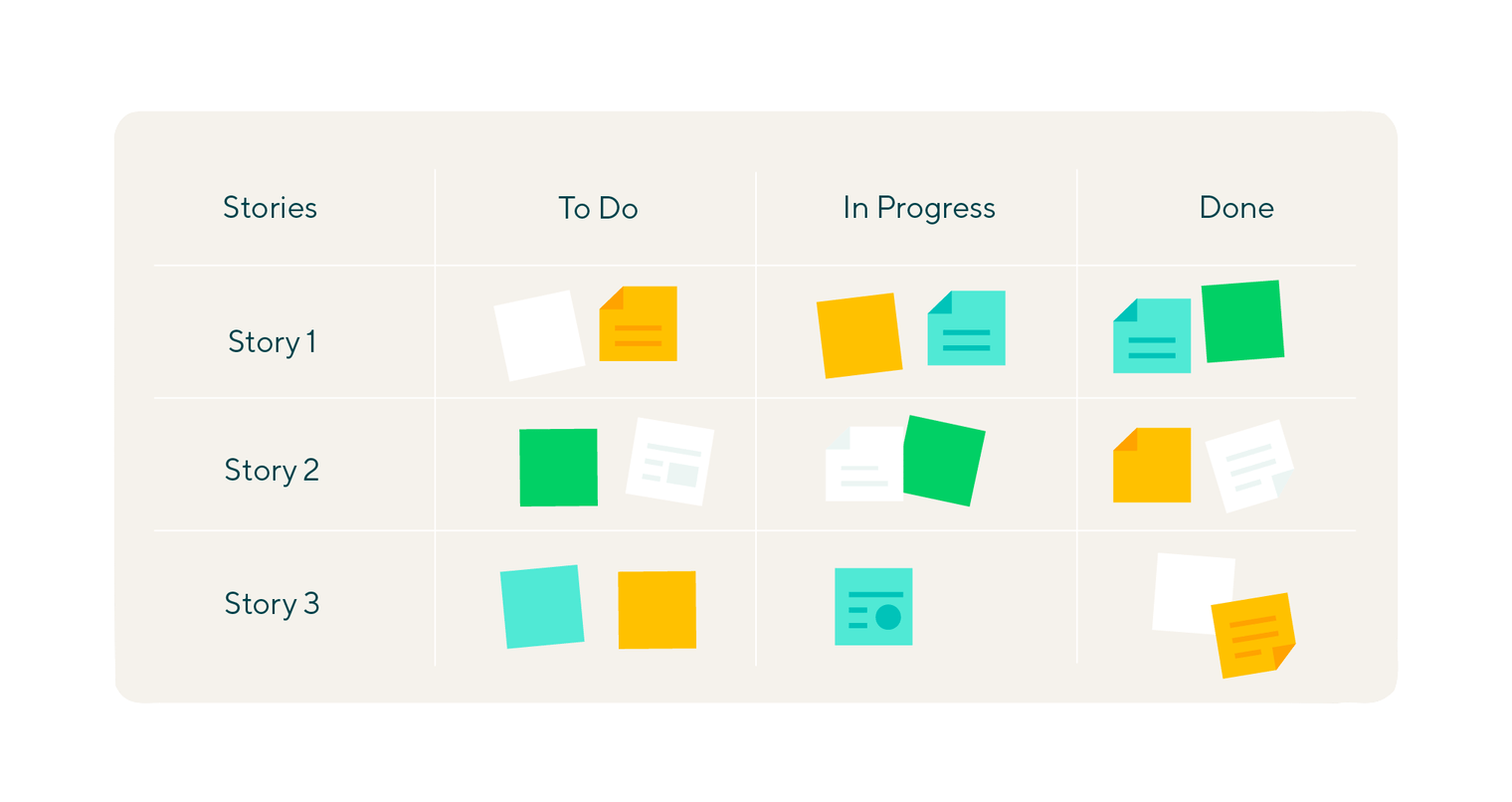
Every daily Scrum meeting revolves around three questions — also known as the daily Scrum questions. The questions are simple but necessary for every session. The three Scrum questions are:
- What did you do yesterday?
- What are you doing today?
- Is there any issue affecting the delivery of your tasks?
Members of the development team should endeavor to answer these three daily Scrum questions during the stand-up meeting. These questions should be a significant part of your meeting agenda.